Cute Corgi Dog Wizard Illustration
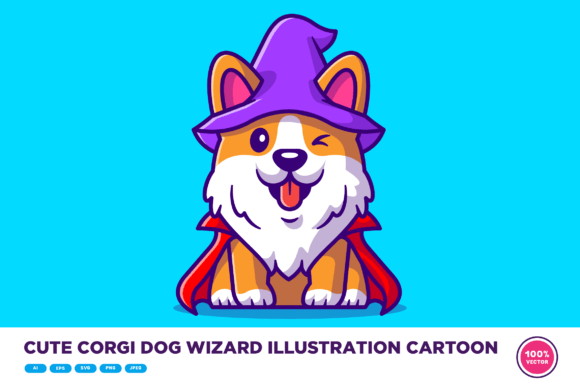
When I first opened the Cute Corgi Dog Wizard Illustration, I felt that familiar spark of recognition that only comes when a design balances personality with practicality. This isn't just another cute animal graphic. It lands somewhere between a whimsical character study and a genuinely usable embroidery asset. The corgi posture is there—those short legs, the oversized ears, the confident little stance—but the wizard hat and tiny wand give it a story. As a designer who has reviewed hundreds of embroidery files and stitched out countless illustrations, I can tell you that this one has real potential for the right project. But it also demands attention to detail before you commit thread to fabric.
First Impressions and Visual Personality
The mood of the Cute Corgi Dog Wizard Illustration is playful without being childish. It leans into the absurdity of a corgi casting spells, but the flat cartoon style keeps it clean and modern. The proportions are intentionally exaggerated: the head is slightly larger than real life, the hat sits at a jaunty angle, and the expression is confident but friendly. That matters for embroidery because you need a design that reads instantly at a distance. A corgi that looks like a corgi is already a win. Add the wizard hat and the wand, and you have a design that invites questions, smiles, and conversation. That kind of engagement is gold for a small shop product or a personalized gift.
The design lines are not overly complex. There is no excessive shading or tiny gradient work that would get lost in thread. The silhouette is strong, so even if someone removes the hat details, the shape still holds. That is the mark of a well-constructed illustration in the graphic assets space. It works at full size and it works when scaled down. I have tested hundreds of animal holiday icon designs, and the ones that survive the embroidery process are the ones that know what to leave out. This corgi knows its limits.
Real Project Performance: The Tote Bag Test
I decided to test the Cute Corgi Dog Wizard Illustration on a medium-weight canvas tote bag. Tote bags are a staple for boutique sellers and craft fair vendors, but they also reveal problems fast. If the stitch density is too high, the fabric puckers. If the design has tiny details, they blur into the weave. If the thread contrast is off, the whole thing looks muddy.
Here is what I found. The corgi body fills the center of the design nicely. The satin stitch on the hat brim added just enough texture without turning into a thread soup. The fill stitch on the body was consistent and not overly dense. I used a medium hoop size—around five by seven inches—and the design fit comfortably with room for a name or a small decorative border if you wanted to personalize it further. The wand is thin but not fragile. A running stitch along the wand shaft kept it clean. The star detail at the tip of the wand held up well, even after I ran the tote through a test wash cycle on gentle.
I also tried it on a cotton sweatshirt. Sweatshirt fabric has give, so I used a cutaway stabilizer and paid attention to the stitch density around the hat details. The design held its shape. The corgi face remained readable, and the wizard hat did not distort. That is not always the case with cartoon vector icon illustrations. When a design is built from simple shapes and thoughtful line work, it travels well across fabric types.
Where This Design Works Best
In my experience, the Cute Corgi Dog Wizard Illustration fits naturally into several product categories. It is not a one-trick pony, but it does have a sweet spot.
- Custom apparel: Sweatshirts, t-shirts, and hoodies. The design sits well on the front chest or upper back. On a children's shirt, it is playful but not babyish. On an adult piece, it reads as quirky and charming.
- Tote bags and aprons: The bold shapes hold up on canvas and twill. For an apron, it adds personality without overpowering the utility of the garment.
- Embroidered patches: This is where the design really shines. A corgi wizard patch sewn onto a denim jacket or a canvas backpack becomes a conversation starter. The flat cartoon style stitches cleanly into a patch shape, and the edges are easy to finish with a satin stitch border.
- Pillow covers and nursery decor: The design is gentle enough for a child's room but not so saccharine that it feels like a generic cartoon. It has character.
- Holiday gifts and boutique products: The wizard theme ties into fantasy, magic, and whimsy. It works for birthday gifts, holiday markets, and themed collections. I can see it selling well in a small shop that caters to pet lovers or fantasy enthusiasts.
Where to Use Care and Caution
No design is perfect for every surface, and the Cute Corgi Dog Wizard Illustration has its limits. Here is what I tell my students and clients before they commit to stitching.
Small hoop sizes are the biggest risk. If you try to cram this design into a four by four hoop, the wand detail and the hat shape will compress. The corgi face might still be readable, but the magic of the illustration—the wizard identity—gets lost. If you only have a small hoop, consider using the design as a patch sewn onto the product rather than stitching it directly.
Textured fabrics like fleece, boucle, or heavy knits can swallow the finer lines. The wand and the hat brim need a smooth surface to register clearly. I recommend testing on a scrap first. If the fabric eats the detail, switch to a design with thicker lines or use a different stabilizer strategy.
Dark fabric requires careful thread color selection. The design as a vector icon uses light and bright colors. On a black or navy background, you will need to adjust contrast. A white or light gray thread for the corgi body and a bright accent for the hat will preserve the readability. Do not assume the original color palette transfers directly to thread on dark fabric.
Curved surfaces like caps or small cylindrical items can distort the shape. The wide head and the tall hat create a vertical silhouette that does not naturally conform to a curved surface unless you resize and reposition. If you want to put this design on a cap, I would suggest a front panel placement and a smaller size.
Frequent washing is another consideration. If you are putting this on a kitchen towel or a baby onesie, the repeated wash cycles can fade thin lines and loosen the stitch density. Use a quality stabilizer, trim the back cleanly, and consider a lower stitch density if your machine allows it.
How It Affects Product Value and Customer Trust
When a customer buys a handmade product featuring an embroidered illustration, they are buying more than a shirt or a bag. They are buying the feeling of owning something that was chosen with care. The Cute Corgi Dog Wizard Illustration delivers that feeling when it is stitched cleanly. It looks intentional. It looks like the designer understood the animal, the theme, and the medium.
That builds trust. A customer who receives a tote bag or a sweatshirt with a crisp, well-placed corgi wizard is more likely to return to your shop. They will associate your brand with quality and creativity. On the other hand, a design that puckers, blurs, or loses its detail in the stitching process undermines that trust. This is why I always tell craft business owners to test before they list. The digital file might look perfect on a mockup, but the thread tells the real story.
For Etsy sellers and small shop owners, the corgi wizard also works as a design asset that can be used across multiple products. You can stitch it on a sweatshirt, print it on a matching card, and feature it in your shop banner. The flat cartoon style translates easily into digital product previews and printable mockups. That consistency builds a recognizable brand identity.
Practical Designer Notes Before You Stitch
I have been doing this long enough to know that the difference between a successful embroidery project and a frustrating one often comes down to a few minutes of preparation. Here is my checklist for anyone working with this illustration.
- Test on scrap fabric first. Use the same fabric type you plan to use for the final product. Stitch the design at full size and at 80 percent size to see how the details hold up.
- Check thread color contrast. Pull the design into your embroidery software and swap thread colors until you have a version that works on light and dark backgrounds. Keep a backup color palette file.
- Review stitch density. If the fill areas feel too dense, reduce the density slightly. A dense design looks beautiful on stabilizer but stiff on soft fabric.
- Confirm hoop size. Make sure your hoop can accommodate the design at its intended size. If you are working with a small hoop, consider using the design as a patch element rather than a direct stitch.
- Inspect small details. The wand and the hat accent should be clear at the size you choose. If they blur, enlarge the design or simplify those areas.
- Test in black and white. View the design in grayscale to check whether the shapes read without color. This helps you spot muddiness or lost details before you spend thread.
- Use proper stabilizer. For stretchy fabrics, use a cutaway stabilizer. For stable fabrics like canvas or denim, a tearaway may be sufficient. Do not skip this step.
- Verify licensing. Before you sell finished items or digital products featuring this illustration, confirm the license terms. Not all graphic assets allow commercial use without attribution or restrictions.
Final Thoughts on the Cute Corgi Dog Wizard Illustration
I have reviewed many illustrations over the years. Some are beautiful on screen but fail on fabric. Others are plain in the digital file but transform into something special when stitched. The Cute Corgi Dog Wizard Illustration sits in the sweet spot. It has enough personality to sell itself, enough simplicity to stitch cleanly, and enough flexibility to work across multiple product types. It is a design that rewards preparation and patience.
If you run a small embroidery business, a handmade product shop, or a creative side hustle, this illustration is worth a close look. It is not a design that will work on every surface or at every size, but when you match it to the right project, it delivers exactly what a good commercial embroidery design should: a finished product that makes people smile, ask questions, and reach for their wallets.
That is the standard I hold every graphic asset to. This corgi wizard passes the test.