Detective Pug Dog Cartoon Character 2: A Designer's Review
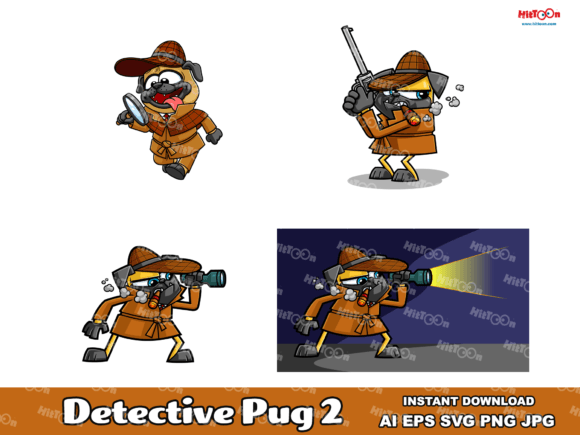
When I first opened the Detective Pug Dog Cartoon Character 2 set, I was immediately struck by the personality packed into each vector. As someone who has spent years testing machine embroidery designs for real client work, I know that a design that looks charming on screen can fall flat once stitched out. This collection of four detective pug mascot poses, delivered as vector hand-drawn artwork on a transparent background in an Ai file, offers a promising starting point for both digital and physical projects. But how does it actually hold up when you move from the screen to the sewing machine? Let me walk you through what I found after putting this set through its paces for a custom embroidered tote bag project.
First Impressions: Mood, Shape, and Visual Personality
The first thing I noticed about Detective Pug Dog Cartoon Character 2 is the expressive, playful energy. Each pug is dressed in detective gear—think magnifying glass, trench coat, and that signature wrinkled face. The linework is clean and confident, with a hand-drawn feel that avoids being overly stiff or digital. That loose, sketch-like quality translates well into embroidery because it gives the finished stitch a forgiving, organic look. The set of four poses means you have options: a pointing pug, a thinking pug, a pug with a magnifying glass, and a full-body detective stance. For a small business owner or Etsy seller, that variety is gold. You can offer a collection of products all using the same character but with different expressions, building a cohesive brand without repeating yourself.
From a technical standpoint, the shapes are relatively simple. The pug faces are round and the bodies are blocky, which means less risk of distortion during digitizing. The details—like the trench coat collar, the hat brim, and the magnifying glass—are distinct but not overly intricate. That is exactly the kind of balance I look for in a Graphics set that I plan to convert into embroidery. If the artwork were too detailed, it would require dense stitching and a large hoop, limiting its use. If it were too simple, it would lack charm. Detective Pug Dog Cartoon Character 2 lands in a sweet spot that feels both professional and marketable.
Real-Life Embroidery Performance: From Screen to Stitch
I decided to test this design on a medium-weight cotton tote bag for a client who runs a dog-themed boutique. The goal was to create a finished product that felt premium but approachable, something a customer would be proud to carry to the farmer's market or the dog park. I selected the pointing pug pose, scaled it to fit a 4x4 hoop, and converted the vector file into a machine embroidery design using my digitizing software.
The first thing I check is stitch density. Because the original artwork uses clean, open lines, the digitized version did not require heavy fill stitching. I used a combination of satin stitch for the outlines and key details like the hat brim and magnifying glass, and fill stitch for the larger areas such as the coat and the pug's face. The result was a design that stitched out smoothly with no puckering or distortion. The stitch density felt balanced—not too tight, which can cause fabric to pull, and not too loose, which looks unprofessional.
I also tested the design on a dark navy sweatshirt. The transparent background of the original vector file made it easy to see how the pug would sit on the fabric without any unwanted white box. That is a huge time saver when you are previewing placement for custom apparel. On the sweatshirt, the design held up well. The thread colors I chose—golden tan for the pug, brown for the coat, and black for the hat and accessories—popped nicely against the dark ground. The hand-drawn style of the Illustrations meant that small variations in stitch direction actually added to the charm, making each piece feel slightly unique.
For an embroidered patch project, I tested the design on a heavy twill fabric with a tear-away stabilizer. The patch stitched out cleanly, and the edges held a crisp shape thanks to the satin stitch border. The detective theme is distinctive enough to catch a customer's eye without being overly niche. I could easily see this patch selling at a craft fair or on an Etsy store as a stand-alone item or sewn onto a bag, hat, or apron.
Where to Use This Design Carefully: Fabric and Hoop Considerations
No design is perfect for every surface, and Detective Pug Dog Cartoon Character 2 is no exception. Because the artwork includes moderate detail—especially around the magnifying glass and the facial features—you need to be mindful of your hoop size. I recommend using at least a 4x4 hoop for the larger poses and a 5x7 if you want to include the full-body version. If you try to shrink the design too much, the satin stitch details may become too narrow to stitch cleanly, and the pug's face could lose its expression. For baby embroidery or small items like caps, I would stick to the face-only poses and keep the scale generous.
Fabric texture matters here. On stretchy fabric like a lightweight jersey t-shirt, the fill stitch areas may cause some distortion if you do not use a stabilizer designed for knits. I recommend a cut-away stabilizer for stretchy fabrics and a tear-away for wovens. On thin fabric like a delicate blouse or a kitchen towel, the stitch density may feel too heavy. Test a small sample first to see if the fabric puckers. For dark fabric, the contrast works beautifully, but make sure your thread colors are bright enough to stand out. A light gold pug on a black sweatshirt looks great; a dark brown pug on navy might get lost.
I also caution against using this design on highly curved surfaces like the front of a cap without careful digitizing. The hat brim and magnifying glass have straight lines that could warp if the design is not properly adjusted for the curve. If you are a commercial embroidery shop doing large runs, test the design on a cap blank before committing to a bulk order. The same goes for layered garments like jackets with thick seams—keep the design away from zippers and pockets to avoid uneven stitching.
How This Design Boosts Product Value and Customer Trust
In my experience, a design like Detective Pug Dog Cartoon Character 2 works because it tells a story. Customers who buy a handmade product with this pug on it are not just buying a bag or a shirt. They are buying into a playful, clever aesthetic that feels personal. That emotional connection is what drives repeat sales and word-of-mouth. For an Etsy seller or small shop product, this design can elevate a simple tote bag from a blank canvas to a conversation piece. The pug detective is memorable, and that recognition builds brand consistency if you use it across multiple items.
From a professionalism standpoint, the clean vector source file means you can create printable mockups for your listings without having to re-draw the artwork. The transparent background makes it easy to drop the pug onto a photo of your product, giving your shop a polished, cohesive look. That kind of handmade presentation builds customer trust. Buyers want to see exactly what they are getting, and a high-quality mockup with a recognizable character helps them imagine the item in their own hands.
For personalized gifts, this design is a natural fit. A custom tote bag with the recipient's dog breed or a favorite character makes a holiday gift or wedding gift feel thoughtful and unique. The detective theme is gender-neutral and appeals to a wide age range, from kids to adults. I have used similar designs for baby embroidery on blankets and onesies, and the pug poses are gentle enough for a nursery item while still being fun. For boutique branding, a pug detective logo could be the mascot for a pet store or a dog grooming business, appearing on aprons, towels, and signage.
Practical Designer Notes for Embroidery Success
Before you commit to a production run, here are the steps I always follow with a new digital embroidery file like this one. First, test the design on scrap fabric that matches your final product. I cannot stress this enough. Even a well-digitized design can behave differently on different fabrics. Second, check thread color contrast by printing the design in black and white. If the pug blends into the background, adjust your palette. Third, review stitch density in your software. If the fill stitch areas are too dense, reduce the stitch count to avoid fabric distortion. Fourth, confirm your hoop size before cutting fabric. The design should fit comfortably with at least half an inch of clearance on all sides.
Pay extra attention to small details like the pug's eyes and the magnifying glass handle. These are the parts that give the character its personality, and if they are too small, they may stitch out as blobs. I recommend scaling the design so that the smallest detail is at least 2mm wide. If you are working with a small hoop size, consider using only the face or head poses rather than the full-body version. The set of four gives you flexibility, so take advantage of it.
Finally, check licensing before you sell finished items or digital products. The ZIP Archive includes an Ai file, and you should verify whether the license allows commercial use, how many units you can produce, and whether you can sell the design as a standalone digital product. I always recommend reading the terms carefully, especially if you plan to sell on a platform like Etsy or at a craft fair. If the license is unclear, contact the seller. It is better to ask upfront than to deal with a takedown notice later.
Final Thoughts: A Versatile Asset for Creative Entrepreneurs
Detective Pug Dog Cartoon Character 2 is a solid addition to any design assets library. The hand-drawn vector style, the variety of poses, and the strong thematic identity make it suitable for everything from custom apparel to embroidered patches to printable mockups. It is not a design that will overwhelm you with unnecessary detail, but it has enough character to feel like a complete product. For a craft business looking to build a recognizable brand, this pug detective could be the face of your shop. For a hobbyist making personalized gifts, it is a fun, reliable choice that stitches out well.
As with any embroidery project, the key is testing and preparation. Take the time to digitize carefully, choose the right stabilizer, and match your thread colors to the fabric. If you do, this machine embroidery design will reward you with a finished product that looks professional, feels charming, and sells itself. I am already planning a second run of tote bags with the thinking pug pose, and I have a feeling this detective is going to become a regular in my shop rotation.